

13. Mai 2026
Peter Salden
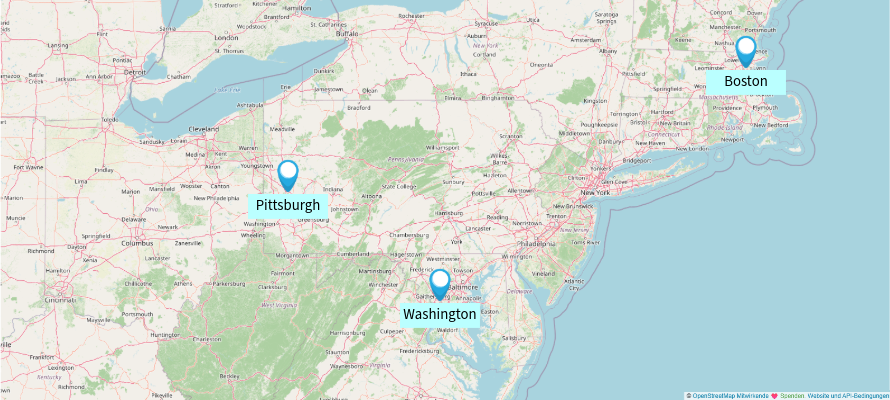
North Rhine-Westfalia’s Minister of Culture and Science Ina Brandes visited the USA in March 2026, accompanied by six AI-specialised scientists from NRW universities. The aim: to gain insights into changes in the labor market and science caused by Artificial Intelligence (AI) – and to find out where the pace for these developments is currently determined. What political frameworks are the USA setting? What is changing in the practice of educational institutions? And what interrelationships exist between the scientific and the business world? Dr. Peter Salden, director of Ruhr-University’s Center for Teaching and Learning, was part of the delegation.
Arrival
It’s early evening, and land is visible beneath the clouds. Long Island, the area to the west of New York, appears first. Then flat land and hill ranges: the Appalachians. The plane is descending, and near Washington, large estates with villas in the forest appear. We are landing in the USA in the year 2026.
Many Europeans no longer want to come here, whether out of a general antipathy towards American politics or due to specific concerns about having to provide insights into their own digital lives upon entry. I, too, have already shared some personal data in advance, a prerequisite for entry. I preferred to leave my work laptop at home. However, the entry is not particularly spectacular; the woman at the immigration counter barely checks anything more than the passport.
And, already, we are in the middle of everyday American life: People of different origins are everywhere to be seen, the immigration police ICE is not; one shop offers Trump hoodies, another one sells postcards with opposing messages. There is war in Iran, and in Washington, joggers are running in the evening sun. There are many large cars, but the potholes on the highway make us fly out of our seats. America, a land of contradictions. We want to take a closer look in the next few days.
Day 1: Opening in Washington
We start at the very western edge of the city, where Washington is already getting green again. This is the location of the German Embassy. We enter without problems. Yet as we enter the meeting room on the top floor, the German envoy briefly holds us back. In front of the door stands a tall, narrow cabinet with small lockers. “Please lock your mobile phones in here” – the risk of wiretapping.
This is the first meeting on our trip: We are briefed on the current relationships. There are commonalities, but also many differences. It becomes clear to us once again: The conditions for a visit to the USA could be simpler.
However, our first American conversation partners do not let us feel this. Still in the embassy, we meet representatives of the National Science Foundation (NSF), who emphasize their great interest in continuing good cooperation with German institutions. And the following meetings with scientists from George Washington University and Georgetown University also convey this impression. We talk about trustworthy AI and changes in the labor market due to AI. In this professional exchange, foreign policy plays a minor role.
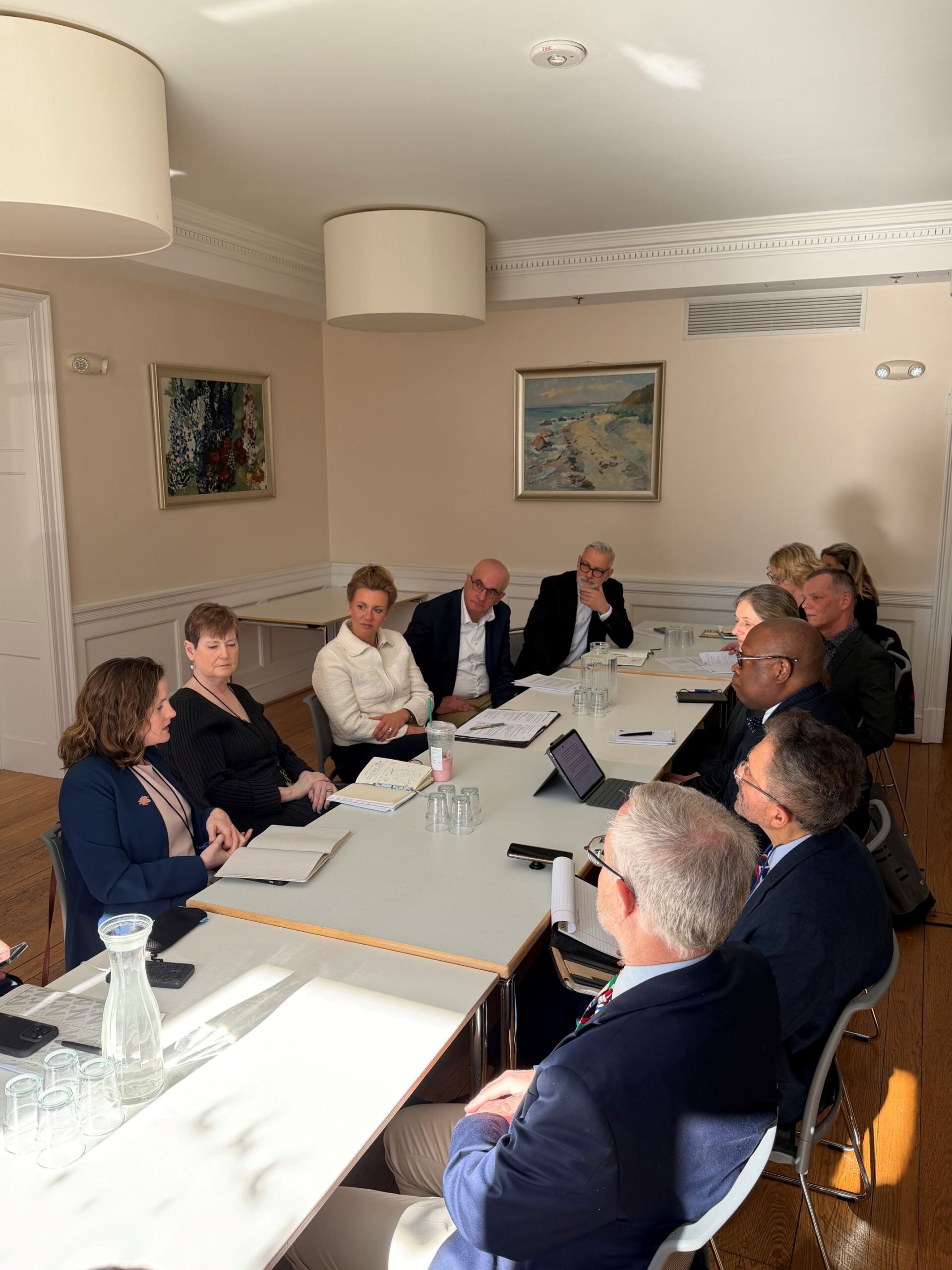
Photo: MKW NRW
And yet, on this day, we also notice a bit of the chilling wind. We are visiting the State Department, the American Foreign Ministry. In the spacious entrance hall hang pictures of a grim-looking Donald Trump and his Foreign Minister Marco Rubio. We pass the security check and walk back and forth through the corridors of the rather dreary office building for quite some time until we arrive at a windowless meeting room. Our conversation partners are not unfriendly, but clear in their messages. It is about American interests in the field of AI. The US government stands for innovation and deregulation. There is no scepticism here towards “Big Tech” and its approaches; on the contrary: it is politically desired that the country takes the lead in AI and also takes risks in this regard. The goal is worldwide dominance in the field of AI: Also Europeans should use American AI products. This is neither surprising nor secret. One can read it, for example, in the “AI Action Plan” of the American government, issued in July 2025.
Reading tip: The “AI Action Plan” of the US government
For me, however, it is still helpful to hear this directly from American government representatives. Here, by personal experience, it becomes even clearer to me that one can hardly separate American companies and American politics from each other. American foreign and trade policy promotes the use of American products and thus serves the companies. Conversely, this also applies: The dominance of US products also has a political function, namely to secure American influence. Digital sovereignty and the regulation of AI, on the other hand, are red rags here. It is good to remember this at a time when we are looking for more independence from American products in German universities.
Day 2: Washington again, Naval Research Laboratory
We have driven a bit out of Washington. Here, on the banks of the Potomac, lies the Naval Research Laboratory (NRL), a large research facility of the American Navy. The buildings are unspectacular from the outside and remind me of the renovation backlog at German universities – stained walls, linoleum floors, rickety kitchens, and insect traps on the floor. But the impression should not be deceiving: Top research is conducted here. For example, the foundations of the Global Positioning System (GPS) were invented at the NRL, and satellites were prepared for the journey into space.
The aim of our visit is the research department for autonomous systems. There are special test environments for them here – a small desert landscape, water basins, a tropical house. Behind the hardware components tested therein, such as sensors, there is increasingly AI-based software – whether based on language models or other AI solutions. In our exchange with researchers from the NRL, we gain insights into their current work.
In Europe in recent years, attention to American research policy has often been limited to politically-ideologically motivated cuts in research funds. During our visit – also, for example, in the already mentioned conversation with the National Science Foundation (comparable to our DFG) the day before – it becomes clear that large sums of money continue to flow into research, especially into the topic of AI.
More about the funding policy of the National Science Foundation
The NSF has formed thematic focus areas within the framework of its funding policy, for which national centers are funded. At the same time, framework conditions are created that give researchers and teachers access to computing power, software, data, models, educational materials, and expertise. A lot of money flows into military research, but also into other – even AI-critical – work.
Days 3 and 4: Carnegie Mellon University Pittsburgh
The mobile phones beep, all of them. It is like on a German “warning day”, only this is not a drill. The screen says: “TORNADO WARNING. Take shelter now in a basement or an interior room on the lowest floor of a sturdy building.” We improvise a circle of chairs in front of a vending machine and talk in the hallway until the storm has passed.
We are in Pittsburgh, the second destination of the trip. It is a visit to the Rust Belt, the American Ruhr area. This is familiar to me: Already during the flight the day before, gigantic steelworks greeted us on the banks of the Monongahela River. The city also shows what I know from the Ruhr area – areas in transition, repurposed industrial buildings, but also areas in decay and drug addicts in the city center. Pittsburgh is one of the cities that has already taken many steps on its way of post-industrial transition and wants to combine the old strength in industrial production with new knowledge-based approaches. Again and again, we hear in Pittsburgh how important the role of universities is in this context.
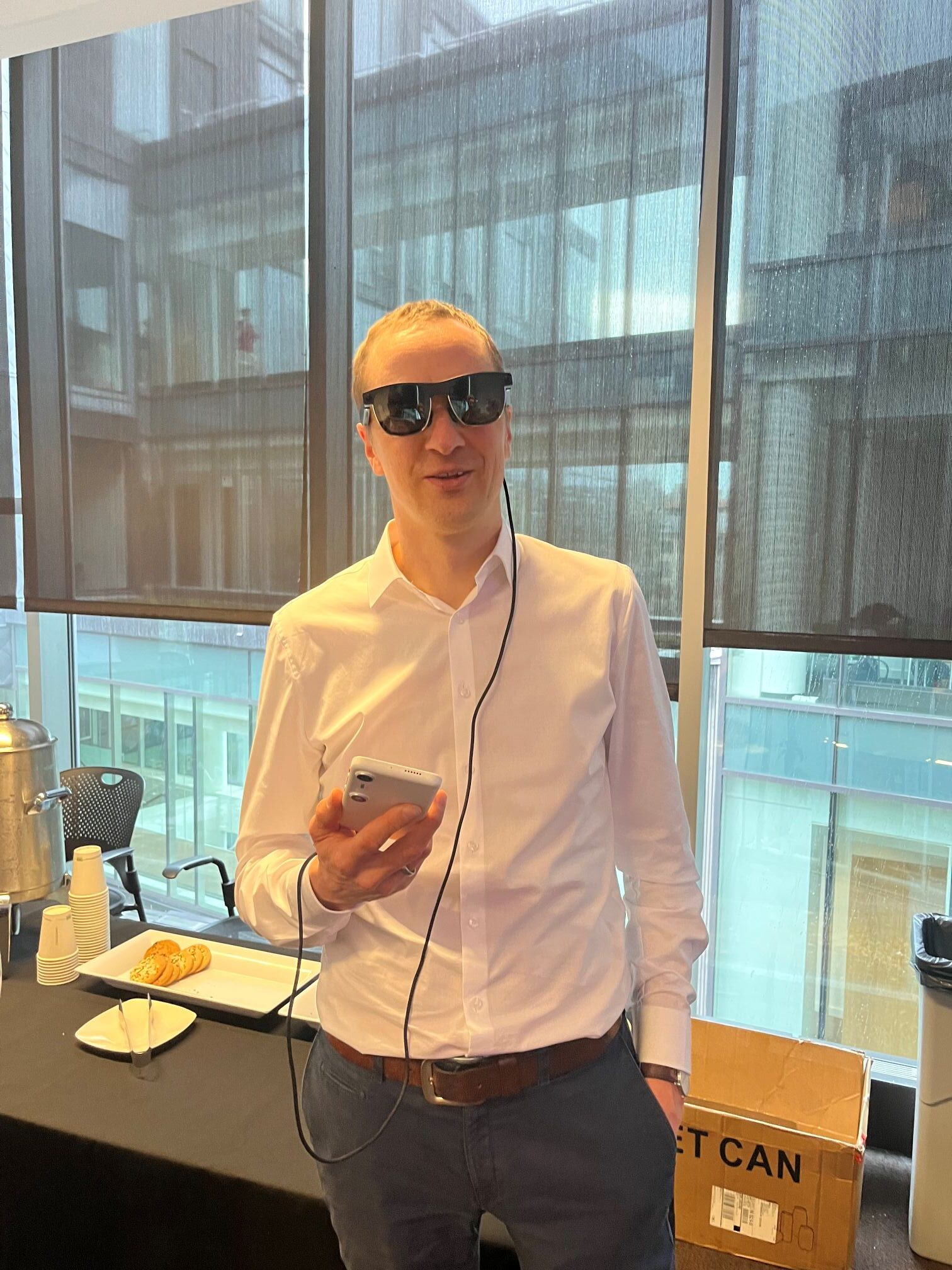
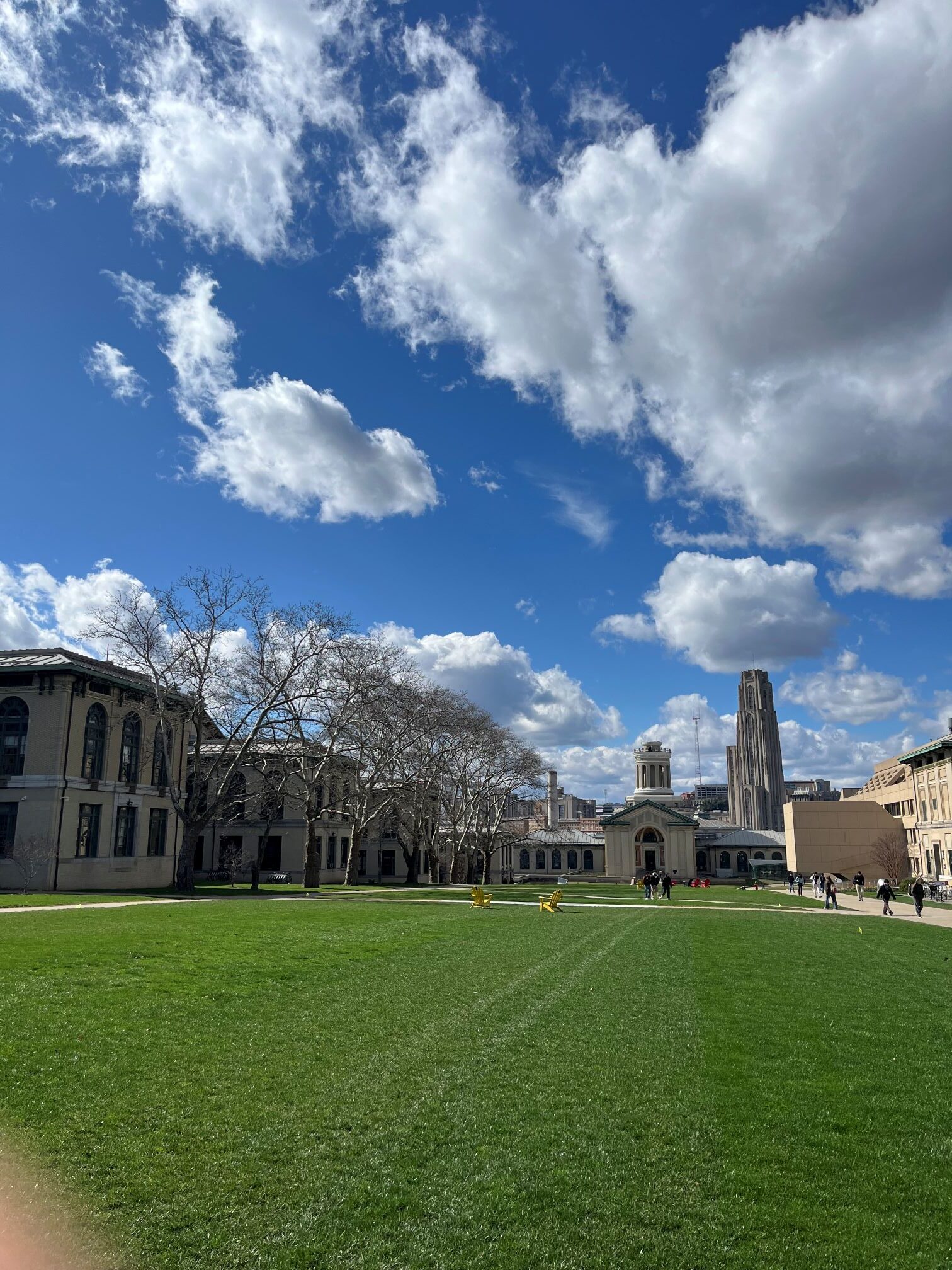
Hence, it’s good that we are here – on the campus of Carnegie Mellon University (CMU), about eight kilometers east of downtown Pittsburgh. Here we engage in conversation with various scientists. For me, it is particularly interesting to see how AI is dealt with didactically and infrastructurally, but also how teaching development is approached in general.
For example, there is the Center for Teaching and Learning of CMU, the Eberly Center with its 23 employees. Through the center, the CMU awards funding to teachers so that they can try out AI-oriented teaching scenarios in small projects. Its special feature: It is attempted to evaluate the effectiveness of the projects on the basis of small accompanying research projects.
In this way both, a rapid introduction of AI in teaching is promoted and the challenge that the exact benefit of AI in teaching is still unclear is met as well. Evidence-based development of teaching: this is something that the CMU has visibly set as a goal.
My impression is: At CMU, the questions and problems raised by AI in teaching are identical to those of us. The solutions are also similar. However, it is quite impressive how many tasks are tackled simultaneously in a single institution here and how professionally the university tries to address the challenges of AI.
In view of its extensive expertise in technology-related educational research, CMU is a highly interesting research partner for North Rhine-Westphalian universities. Minister Brandes therefore signed a Memorandum of Understanding with CMU, which aims to establish a graduate school for AI in higher education research. Young researchers from the partner institutions of the Digital University NRW are to work here with American scientists.
More about this can be read in a press release from the MKW.
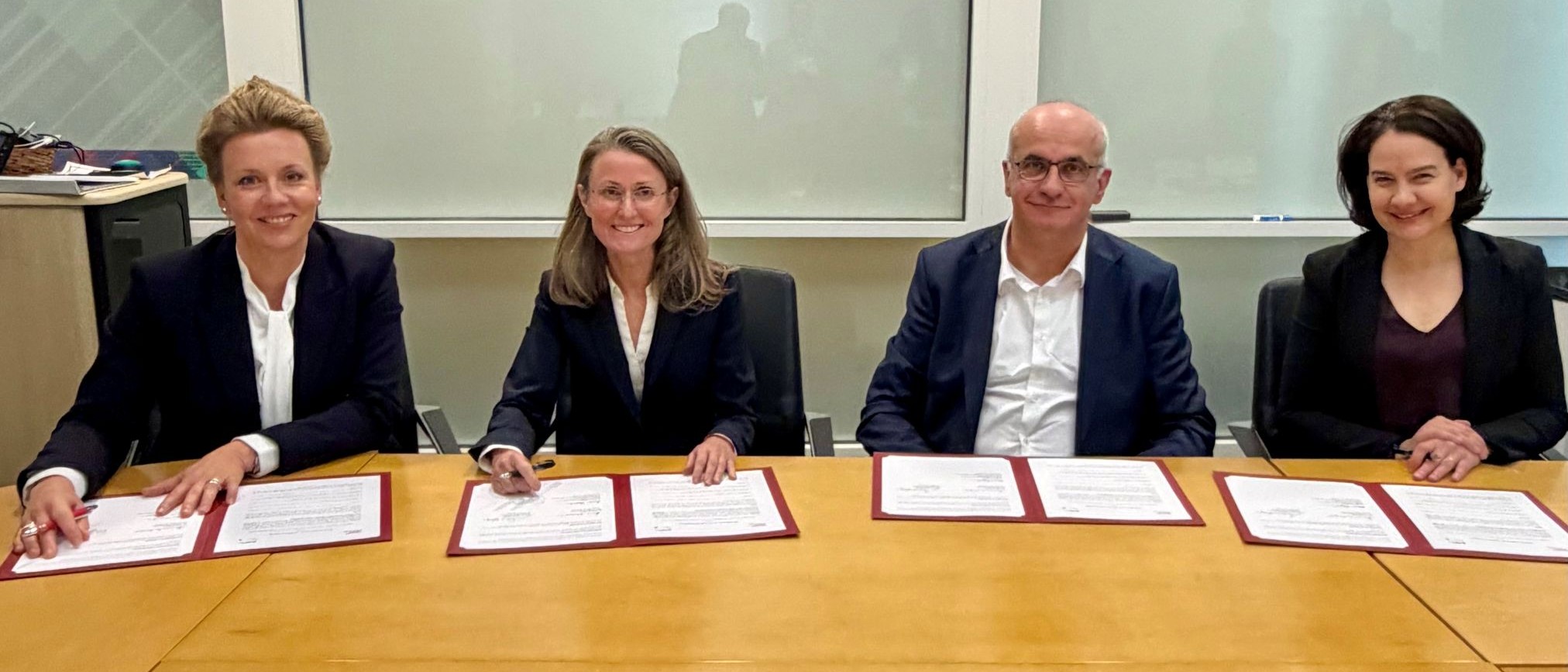
Photo: MKW NRW
Day 5: Back in Pittsburgh, Steel to AI
We are at Bakery Square, in the far east of the city, in the buildings of a former large bakery. In the past, cookies were made here, today it is about high technology. The site has been refurbished for the tech industry to house startups, tech corporations, and also scientific institutions in close proximity to each other. The passing road bears the informal nickname “AI Avenue”.
For example, Google is located at Bakery Square with a department specializing in AI. Not far away is the headquarter of Duolingo, which was founded by alumni of the CMU. Later, elsewhere in the city, we visit the company Bosch, which maintains a research group in Pittsburgh and cooperates closely with the universities of Pittsburgh for this purpose.
The goal of the city administration is to establish Pittsburgh among the top 5 AI cities in the USA. At Bakery Square, we learn about the AI Strike Team in this context. Here, politics, science, and business work together to jointly develop initiatives to strengthen AI. The Strike Team has dealt with the question of hyperscaler locations in the near vicinity, access to computing power for startups, incentive systems for the use of AI in companies, and not least with bundling private investment funds to support startups. The “storytelling” about Pennsylvania as a state that is moving from “Steel to AI” is also part of the fields of action.
Overall, this is something that stands out on our trip: There are many close connections between universities and the business world. Tech corporations relatively willingly give money for research projects, sometimes also in combination with state funding according to a “50:50” model. On the other hand, universities like CMU seem to follow a liberal tech transfer policy, in which it is quite common for employees and students to start a company. Professors can spend up to 20% of their time on extra-university projects. Even if a lot is already changing in Germany, it seems to me that there is still a difference to German universities at this point.
Conclusion: A Detour to Boston and a Summary
That was quick: The visits are over, my suit hangs in the hotel wardrobe, and all other delegation members are on their way home. But I take a detour because I won’t be coming back to the USA soon again.
I am in Boston and have cycled a few kilometers out of the city on a rental bike; slightly uphill against the wind, quite exhausting. But now I am sitting in the evening sun under tall trees, a large columned front behind me, a well-kept lawn in front of me, and behind it a slender church. A grey squirrel scurries up and down the tree. I am in the famous courtyard of Harvard University.
Here, a lot comes together: a top American university, academic tradition, but also the most prominent example of resistance against current political interventions in academic freedom. A conversation partner on our trip had told us: “I have never been so proud to be a Harvard graduate. The attitude of the university inspires me in this difficult time.” Throughout our trip, we noticed time and again that universities in the U.S. are under pressure.
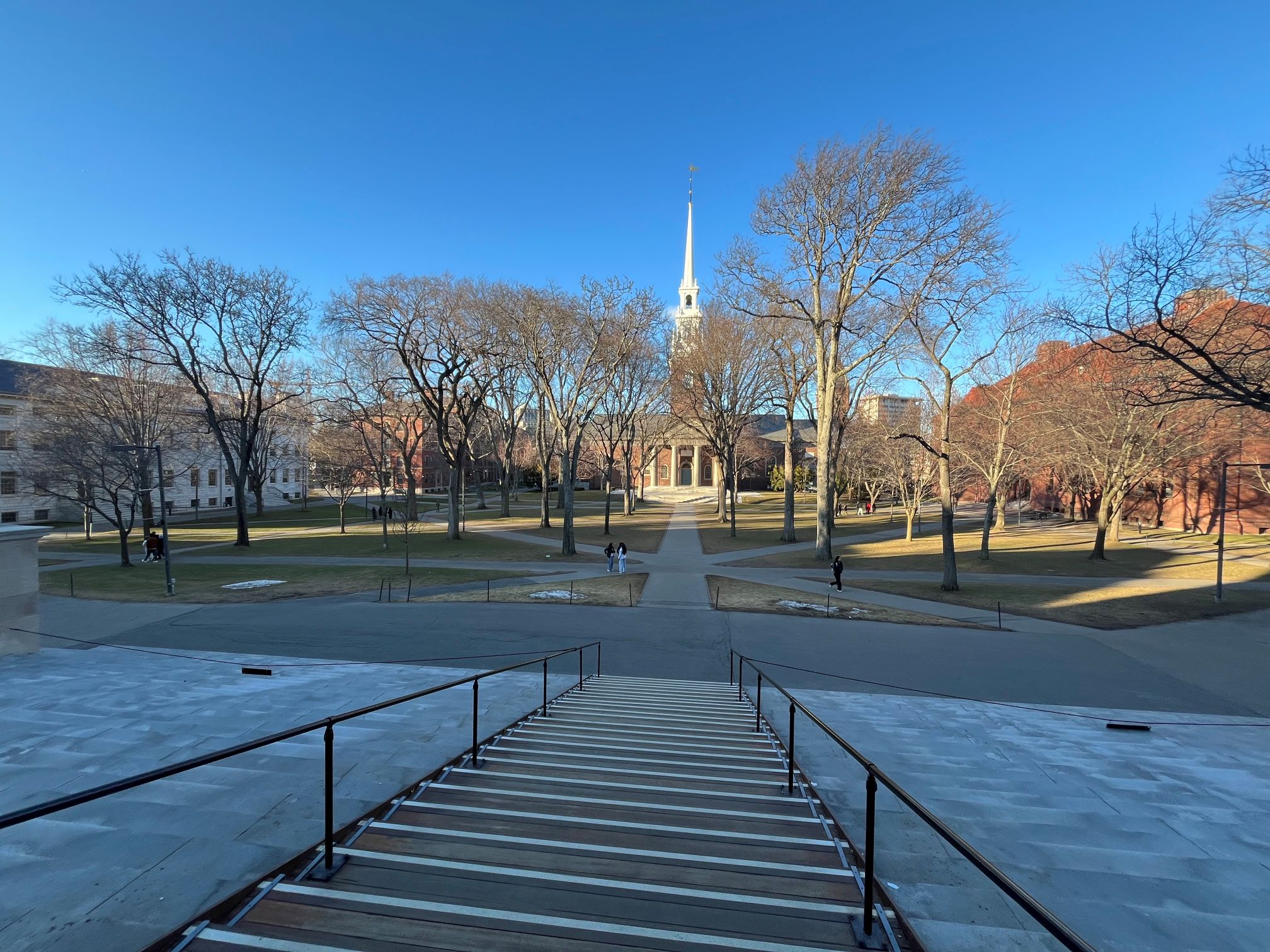
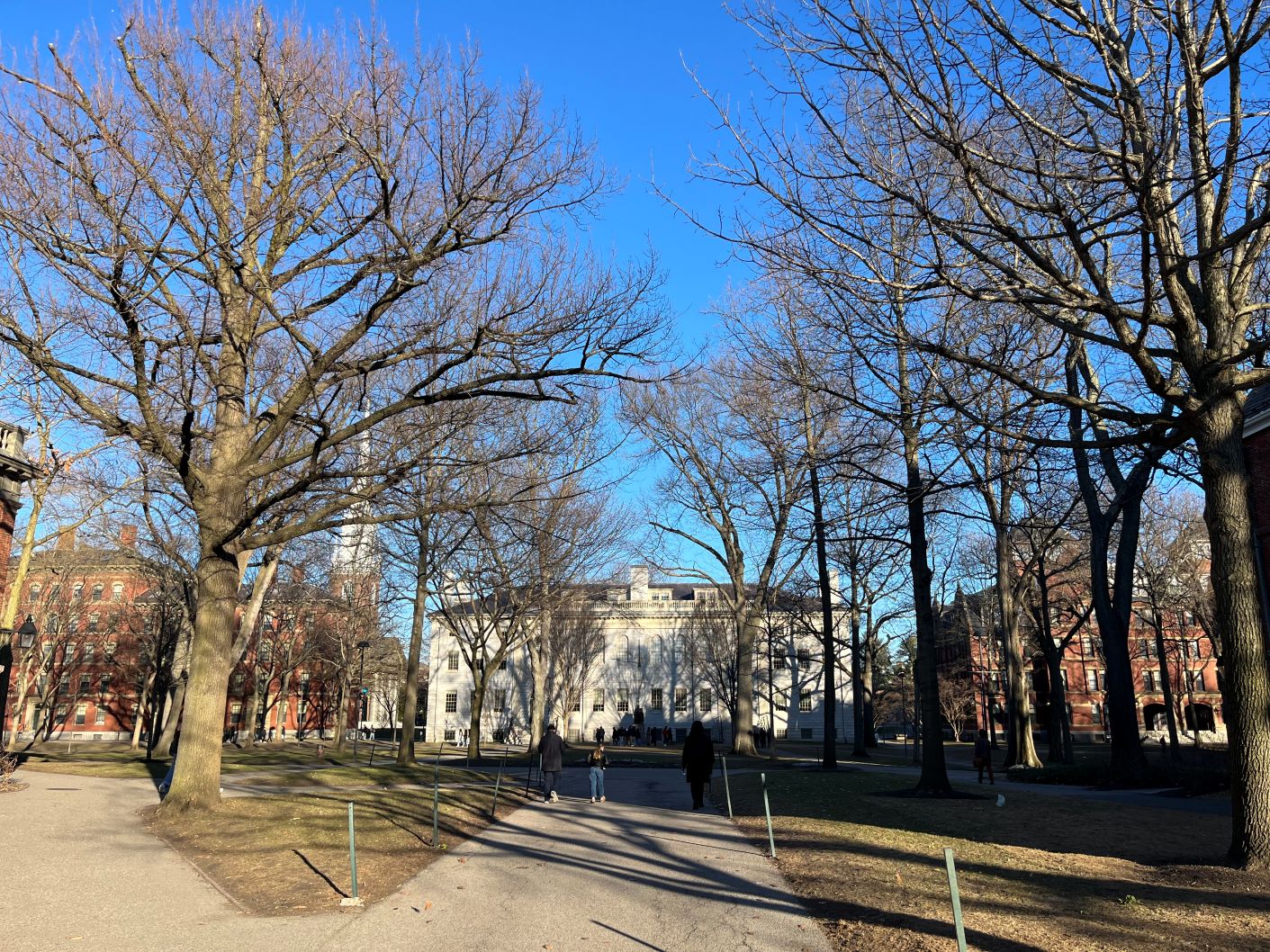
So, looking back: Are the USA politically lost? It doesn’t look like it, Harvard and others are standing against it. Will everything be the way it was again? Certainly not, not even here at Harvard, despite all the tradition. Maybe politics will change again, but AI will also have lasting consequences here.
What have I taken away from the visit? It has sharpened my understanding that the American government has a strongly innovation-friendly attitude towards AI, in which politics and tech companies are working together towards worldwide AI dominance. Politics and the economy are investing heavily in corresponding research. Teaching is also changing, with American universities facing similar challenges to German ones. Although this also exists in Germany, I was impressed by the joy of trying new things, evidence-based approaches, and the approaches to professionalising the support staff. And it is not to be overlooked that the USA is very closely seeking the collaboration of local politics, companies, and science, which is also moving a lot locally.
But I would say: Nothing that we cannot also do if we become more determined in some areas. The work at home is looming on the horizon again. On the agenda is the proposal for an “AI Center of Expertise.nrw”. That seems like a good next step now.
Image Credits:
Title image: OpenStreetMap
Group pictures conference table and signing: MKW NRW
Remaining images: Peter Salden
Kommentare
Neuigkeiten aus dem ZfW per E-Mail erhalten

Peter Salden
Dr. Peter Salden leitet das Zentrum für Wissenschaftsdidaktik der Ruhr-Universität Bochum.
Alle Schlagwörter
5x5000
Barrierefreiheit
BNE@RUB
Demokratiebildung
Didaktik-Tipp
DigitalChangeMaker
Digitalisierung
E-Learning
E-Prüfungen
eTeam Digitalisierung
Für Lehrende
Für Studierende
Game Based Learning
GPT@RUB
Hausarbeiten schreiben
HD-Absolvent*innen im Interview
Hochschuldidaktik
Hochschuldidaktische Qualifizierung
Ideen für die Lehre
Internationalisierung
KI:connect
KI:edu.nrw
KI:Expertisezentrum.nrw
Künstliche Intelligenz in Studium und Lehre
Learning AID
Learning Analytics
LEHRELADEN
Lehrflächen der Zukunft
Leitbild Lehre und Studium
Lesen und recherchieren
Methoden-Tipp
Moodle
Nachhaltigkeit
Net[t]working
Neues aus der Community
Open Educational Resources
Projekte
Prüfen
Recht
Schreibcafé
Schreiben an der Uni
Schreibmaschine
Schreibtipps
Storytelling
Studentische Partizipation
Tools
Über den Tellerrand
UNIC
Veranstaltungen
ZfW HÖRsaal